

Welcome to the 112th edition of DevShorts, Dev Catch Up.
For those who joined recently or are reading Dev Catch Up for the first time, I write about developer stories and open source, partly based on my work and experience interacting with people all over the globe.
Thanks for reading Dev Shorts! Subscribe for free to receive new posts and support my work.
Some recent issues from Dev Catch up:
Claude Certified Architect Foundations: The Complete Guide - Part 1
Claude Certified Architect Foundations: The Complete Guide - Part 2
Join 8900+ developers to hear stories from Open source and technology.
Must Read
Anthropic has released Claude Fable 5 and Mythos 5. Fable 5 brings the Mythos model family to general users, but with stricter safeguards. For safety, some sensitive requests are routed to Claude Opus 4.8 instead. Mythos 5 is for trusted users who need more flexibility in areas like cybersecurity. Check Anthropic’s post for more details.
Google has released Gemini 3.5 Live Translate. It is a new audio model for live speech to speech translation. It can detect more than 70 languages and translate speech while keeping the speaker’s tone, pace, and pitch. Check Google’s post for more details.
Kimi has launched Kimi Work, a local desktop AI agent for everyday work. It can connect to your local files and use the browser for tasks. It can also run scheduled tasks and coordinate multiple agents for larger work. Check Kimi’s page for more details.
Google has released DiffusionGemma. It is an experimental open model built for faster text generation. It uses diffusion method, which creates blocks of content at once instead of going token by token. Google says it can run up to 4x faster on dedicated GPUs. Check Google’s post for more details.
OSS Highlight of the Week
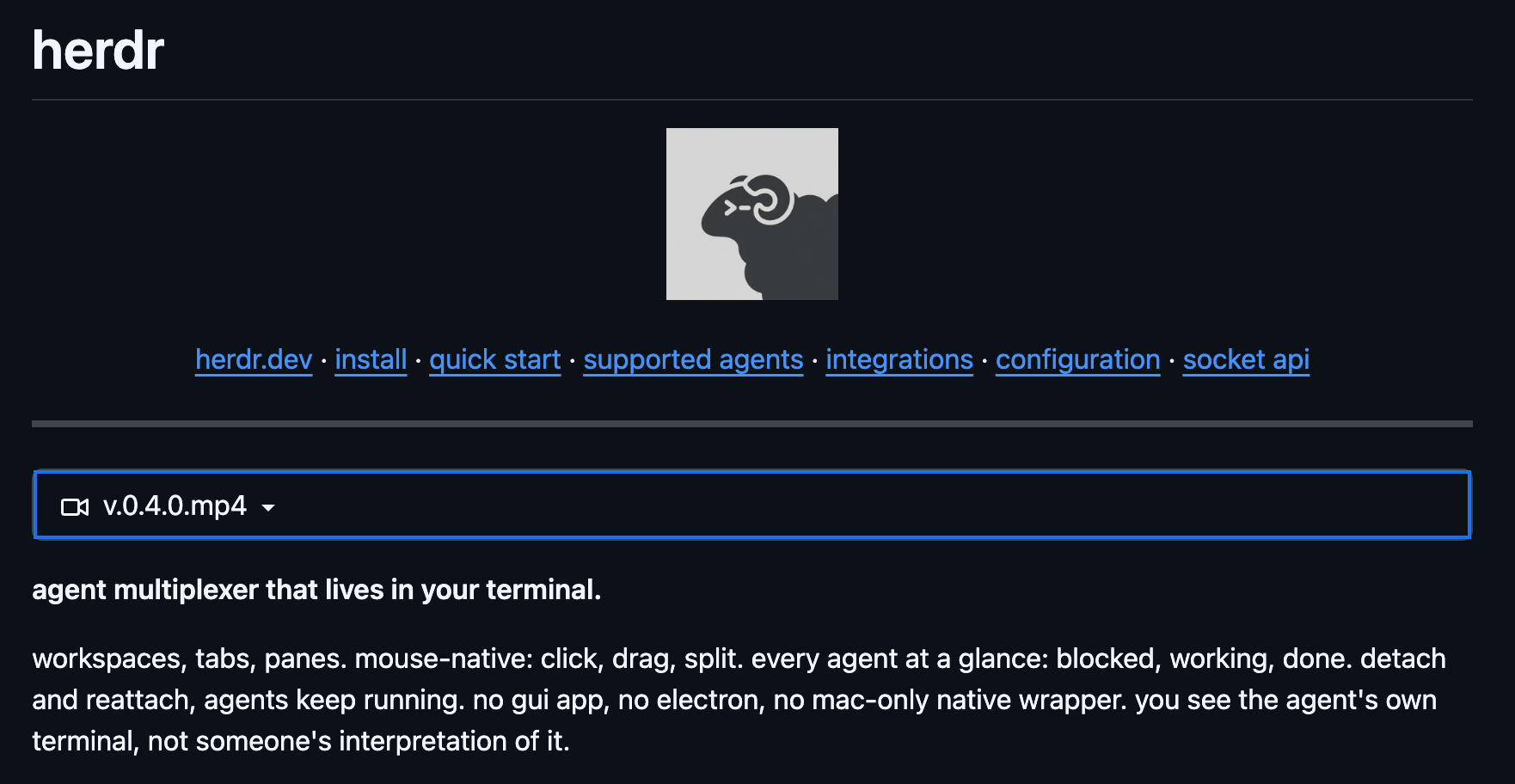
This week we are featuring Herdr. It is a terminal based agent multiplexer for running multiple coding agents. You can organize agents in workspaces, tabs, and panes. It also shows whether agents are blocked, working, or done. It supports detach and reattach, so agents can keep running in the background. Check the GitHub repo for more details.
Good to know
Anthropic has changed how Claude Code billing works after June 15. If you are not sure whether to use Pro, Max, API credits, or Codex, this pricing breakdown is useful. It explains what is still covered by your Claude plan and what now needs separate credits. Check FindSkill’s post for more details.
ChatGPT can now generate charts directly inside the chat. You can ask it to turn data or comparisons into simple visuals. The feature is available now on mobile and web. Check ChatGPT’s post for more details.
If you are trying to learn Agent Harness, this course is a good starting point. It explains why AI coding agents fail and how harnesses make them more reliable. It covers rules, state management, testing, observability, and clean handoffs. Check the Harness Engineering course for more details.
Loop Engineering is becoming popular for AI coding agents. Instead of prompting agents step by step, the idea is to design loops that guide the work for them. These loops can use automations, worktrees, skills, connectors, subagents, and memory. Check Addy’s post for more details.
Notable FYIs
Xiaomi has released MiMoCode, an open source AI coding agent for the terminal. It can read and write code, run commands, manage Git, and keep project memory across sessions. It also supports multiple agents, subagents, MCP, and custom model providers. Check the GitHub repo for more details.
Cohere has released North Mini Code. It is Cohere’s first model built for developers. The open source MoE coding model has 30B total parameters, with 3B active. It is built for agentic software engineering. Check Cohere’s post for more details.
We all use AI tools and know they can consume a lot of tokens. Headroom is a context compression layer for AI agents. It compresses tool outputs, logs, files, and RAG chunks before they reach the LLM. The repo says it can reduce tokens by 60 to 95 percent. Check the GitHub repo for more details.
Cognition has introduced FrontierCode, a new benchmark for coding agents. It checks whether AI generated code is good enough to merge into real production codebases. The benchmark looks beyond correctness and checks tests, scope, style, maintainability, and code quality. Check Cognition’s post for more details.
Apple has introduced Core AI for developers. It lets developers run AI models on Apple silicon. It also includes tools for model preparation, debugging, and inference performance. Check Apple’s documentation for more details.
That’s it from us with this edition. We hope you are going away with a ton of new information. Lastly, share this newsletter with your colleagues and pals if you find it valuable. A subscription to the newsletter will be awesome if you are reading it for the first time.