

Welcome to the 107th edition of DevShorts, Dev Catch Up.
For those who joined recently or are reading Dev Catch Up for the first time, I write about developer stories and open source, partly based on my work and experience interacting with people all over the globe.
Thanks for reading Dev Shorts! Subscribe for free to receive new posts and support my work.
Some recent issues from Dev Catch up:
Join 8800+ developers to hear stories from Open source and technology.
Must Read
Anthropic has released Claude Opus 4.7. It comes with stronger coding, high resolution vision, and a new xhigh effort level. Pricing remains the same as Opus 4.6. Anthropic notes that Mythos Preview still remains its best aligned model based on its evaluations. Check Anthropic’s page for more details.
Google has released Gemini 3.1 Flash TTS. It generates more natural speech and supports 70+ languages. It also adds audio tags to control vocal style, pace, and delivery. Its audio output is watermarked with SynthID to identify AI generated content. Check Google’s announcement for more details.
OpenAI has rolled out GPT 5.4 Cyber. It is built for defensive security work. Access to this model is now open through identity verification. OpenAI says it can inspect compiled software and find malware, vulnerabilities, and other security issues without the original source code. Check OpenAI’s post for details.
Qwen has open sourced Qwen3.6 35B A3B. It is a sparse MoE model with 35B total parameters and 3B active. It comes with strong agentic coding and multimodal reasoning. It also supports both thinking and non thinking modes in one model. Check Qwen’s announcement for more details.
OSS Highlight of the Week
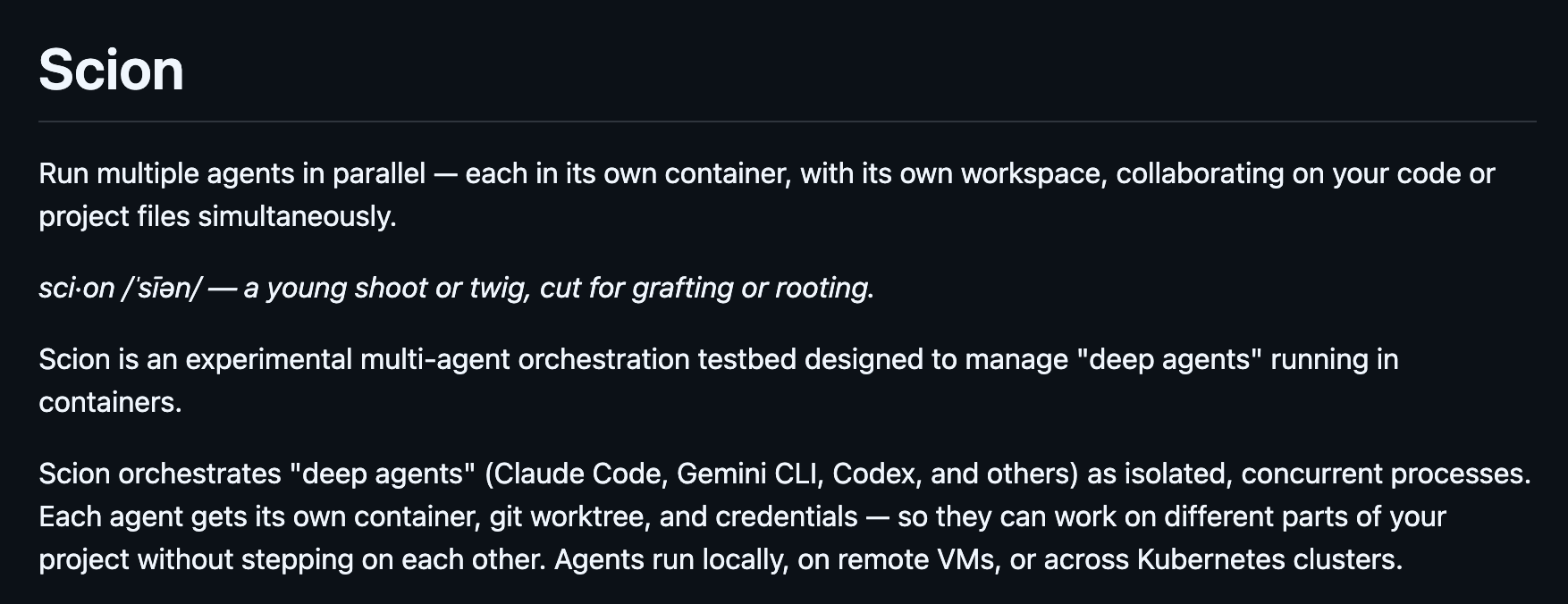
This week we are featuring Scion. It is an open source multi agent orchestration tool. It runs each agent in its own container and git worktree. It helps multiple agents work in parallel without getting in each other’s way. It works with Claude Code, Gemini CLI, Codex, and others too. Check the GitHub repo for more details.
Good to know
Google has launched the Gemini app for Mac. It is a native macOS app. You can share anything on your screen with Gemini to get help, including local files. Check Google’s post for more details.
OpenAI has introduced GPT Rosalind. It is a new model built for life sciences research and drug discovery. OpenAI says it can reason across chemistry, proteins, and DNA, and help with experiment analysis. Check OpenAI’s post for more details.
Google has solved one of the old problems in RNNs with Memory Caching. Earlier, RNNs had to rely on one fixed memory as the input got longer. This new method keeps useful memory from earlier in the sequence. The paper says this improves long context and recall heavy tasks. It also brings RNNs closer to Transformers. Check the paper for more details.
I came across Baileys. It is a WebSockets-based TypeScript library for interacting with the WhatsApp Web API. If you are working on WhatsApp based apps, this is worth a look. Check the GitHub repo for more details.
Notable FYIs
Anthropic has introduced routines in Claude Code. You can now set up repeatable automations and run them on a schedule, through an API call, or from GitHub events. Since they run on Claude Code’s web infrastructure, you do not need to keep your laptop open. Check Anthropic’s post for more details.
Windsurf has launched Windsurf 2.0. It adds a new Agent Command Center to manage local and cloud agents in one place. Devin is now built into Windsurf, so cloud agents can keep working even after you close your laptop. Check Windsurf’s post for more details.
OpenAI has updated Codex in a big way. It now goes beyond coding. It can handle computer use, run multiple agents, and browse the web. It also adds image generation and 90+ new plugins. OpenAI is also adding memory and automations for long running work. Check OpenAI’s post for more details.
Google has introduced Skills in Chrome. You can now turn your prompts into one click tools. They can run on the page you are viewing or across selected tabs. Google is also adding a ready made Skills library. Check Google’s post for more details.
If you are building agents, this is a must read. Garry Tan shared a useful idea on building AI agents. He says keep the harness thin and put more value into skills. His point is that the real bottleneck is not model intelligence. It is whether the model understands your data, process, and context. Check Garry Tan’s post for more details.
That’s it from us with this edition. We hope you are going away with a ton of new information. Lastly, share this newsletter with your colleagues and pals if you find it valuable. A subscription to the newsletter will be awesome if you are reading it for the first time.
have got access to GPY 5.4 cyber , can anyone tell how to use it for security use cases?
Please share docs\resources if any