

Welcome to the 101st edition of DevShorts, Dev Catch Up.
For those who joined recently or are reading Dev Catch Up for the first time, I write about developer stories and open source, partly based on my work and experience interacting with people all over the globe.
Thanks for reading Dev Shorts! Subscribe for free to receive new posts and support my work.
Some recent issues from Dev Catch up:
Join 8700+ developers to hear stories from Open source and technology.
Must Read
OpenAI has released GPT-5.4. It is their most capable model so far. They also released GPT-5.4 Pro in ChatGPT and the API for harder tasks and long running workflows. It brings improvements in reasoning, coding, and agentic workflows. Check OpenAI’s GPT-5.4 announcement for more details.
Many tools are now moving to the CLI, so agents can use them. Google Workspace released Workspace CLI. It lets you access Gmail, Drive, Docs, and Calendar directly from the terminal. The engineer who built it also wrote a post on designing CLIs for AI agents. Check the Google Workspace CLI GitHub repo for installation and usage details.
Google has released Gemini 3.1 Flash Lite, a lightweight model built for high volume workloads. It focuses on speed and lower cost while still handling complex tasks. It is available through the Gemini API, AI Studio, and Vertex AI. Check Google’s Gemini 3.1 Flash Lite announcement for more details.
Qwen introduced the Qwen 3.5 Small model series with 0.8B, 2B, 4B, and 9B sizes. These models aim to deliver stronger performance with lower compute. They also released matching Base models for research and fine tuning. Check Qwen’s Twitter post for more details.
OSS Highlight of the Week
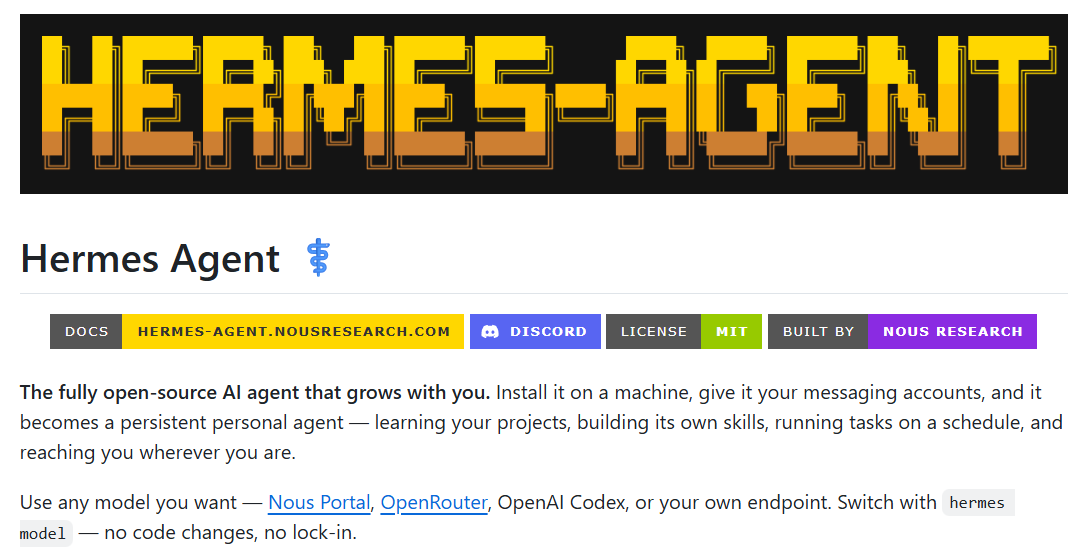
This week we are featuring Hermes Agent, an open source AI agent from Nous Research. It runs on your machine. It acts as a personal agent and learns your projects. It builds skills over time. It can connect to tools like Slack, Telegram, and Discord and automate tasks on a schedule. Check the Hermes Agent GitHub repo to explore more.
Good to know
Anthropic introduced Import Memory in Claude. Now you can bring context from other AI tools with a simple copy paste flow. This helps Claude pick up your preferences and project context faster. Check Claude’s Import Memory page for more details.
Cursor added MCP Apps. It allows interactive interfaces like charts, diagrams, and whiteboards to appear directly inside Cursor. This means tools can return rich visual interfaces instead of just text responses. Check Cursor’s MCP App’s post for more details.
A new interview with Boris Cherny, the creator of Claude Code, explains how the tool was built and how developers are using it today. It covers workflows like running parallel agents and more. Check the Pragmatic Engineer post for the full interview.
If you are building LLMs, this post is worth reading. It explains how open weight LLMs are built. It covers ideas like MoE models, active parameters, and training choices in a simple way. Check the full post for more details.
OpenAI is reportedly building a GitHub rival. The project is still in the early stages. It may be offered to OpenAI’s existing customers. The move comes after several GitHub outages that disrupted developer workflows in recent months. Check the report for more details.
Notable FYIs
OpenAI released Symphony. It turns project work into isolated implementation runs. It spawns agents to handle the tasks. The agents complete the work and provide proof of execution. This lets teams manage the work instead of supervising coding agents. Check OpenAI’s Symphony for more details.
The much awaited Voice Mode is rolling out in Claude Code. It lets developers talk to Claude directly instead of typing prompts. The feature is currently live for a small percentage of users and will roll out more broadly in the coming weeks. Check the post for early demos and rollout details
Anthropic offers 6 months of free Claude Max access for eligible open source maintainers and contributors. The goal is to support developers who maintain important OSS projects. Check the Claude for OSS page to see eligibility and application details.
Cursor introduced Automations. They can run on a schedule or based on events like Slack messages, GitHub PRs, Linear issues, and PagerDuty incidents. You can also configure your own custom events using webhooks. Check Cursor’s Automations post for more details.
This Substack post talks about AI tooling for software engineers in 2026. It shows which tools developers use the most. It also explains how common AI has become in daily development work. Check the Pragmatic Engineer post for the full breakdown.
That’s it from us with this edition. We hope you are going away with a ton of new information. Lastly, share this newsletter with your colleagues and pals if you find it valuable. A subscription to the newsletter will be awesome if you are reading it for the first time.