

Welcome to the 95th edition of DevShorts, Dev Catch Up.
For those who joined recently or are reading Dev Catch Up for the first time, I write about developer stories and open source, partly based on my work and experience interacting with people all over the globe.
Thanks for reading Dev Shorts! Subscribe for free to receive new posts and support my work.
Some recent issues from Dev Catch up:
Join 8600+ developers to hear stories from Open source and technology.
Must Read
OpenAI has announced ChatGPT Health. It adds a new health tab inside ChatGPT. You can now link your medical records and health apps. ChatGPT answers health related questions using your own data. It explains diet and workout ideas from your health history. It keeps your health data private. Read the ChatGPT Health announcement for more details.
Google is bringing Gemini into Gmail. Gmail can now summarize long email threads. It can answer questions about your inbox. It also helps you write replies faster. It highlights important emails and tasks. Read the Google’s announcement on Gmail in Gemini Era to learn more.
Many of us are using Claude Code. Its creator Boris shared how he uses it every day. He runs many Claude sessions and hands them off between terminal and web. He uses subagents to simplify code and verify changes. He also tags @claude on PRs to improve CLAUDE.md. Check Boris’s Claude Code setup for more tips.
We all know Google uses its own hardware to run models. This Substack post explains how Google’s TPU works. It shows why Google built TPUs for neural networks. They move less data and do more math. Read the full post to understand how TPUs power large AI models.
OSS Highlight of the Week
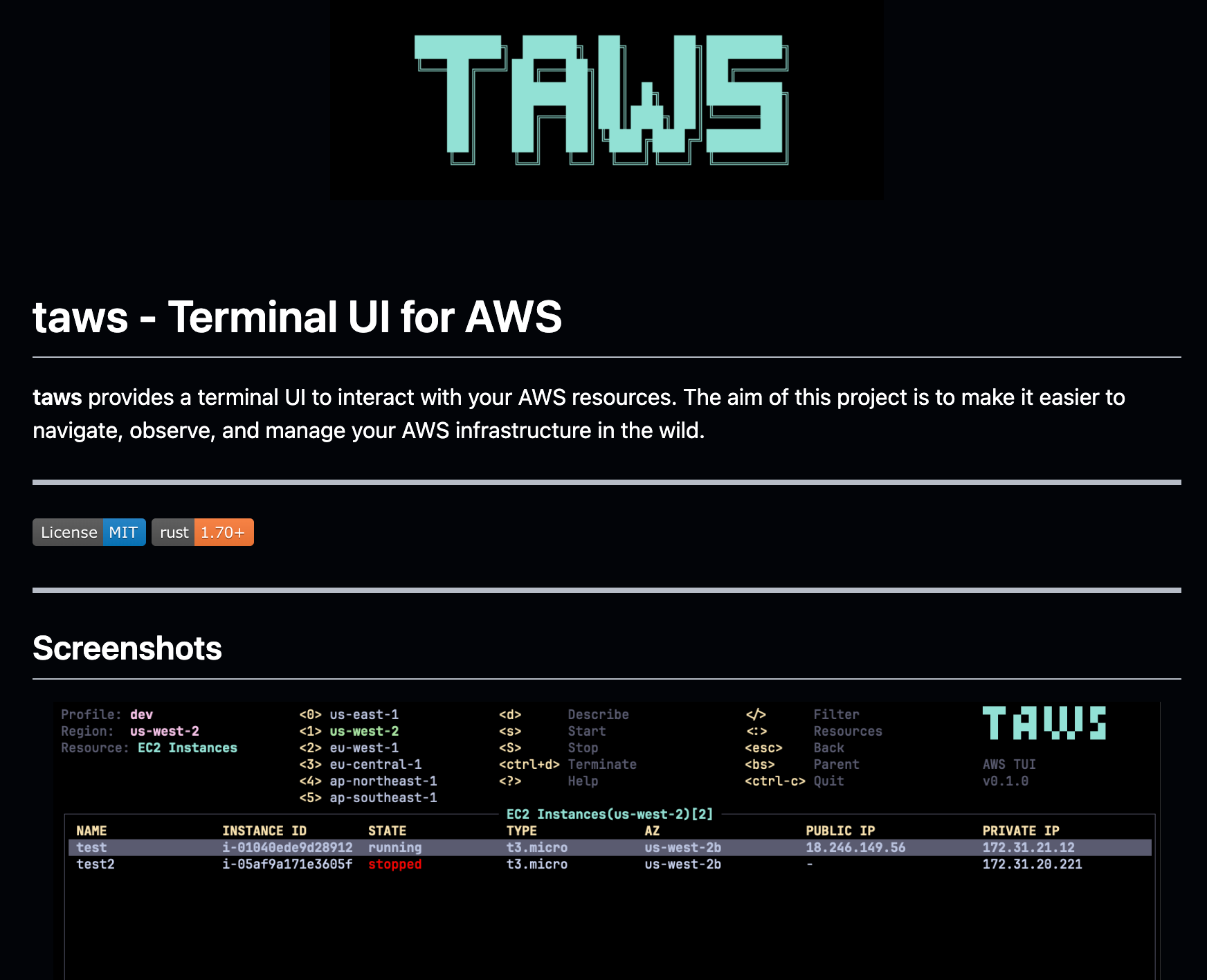
This week we are featuring TAWS. It is a terminal UI for AWS. With taws, you can interact with AWS resources directly from the terminal. It supports multiple regions, profiles and over 90 AWS resources with detailed views. Check the TAWS GitHub repo to know more.
Good to know
Amazon has launched Alexa.com. It is a browser version of the new Alexa+ assistant. Alexa now works on the web too. You can type to Alexa and get your queries answered. This puts Alexa in the same space as ChatGPT and Gemini. Read the Alexa.com announcement to learn more.
The Substack post looks at what happens to software engineering when AI writes most of the code. It shows how models like Opus 4.5 and GPT 5.2 now ship production code. As a result, many engineers no longer open an IDE. Read the full post to know more details.
NVIDIA unveiled the Rubin platform for AI supercomputers. It combines six new chips into one tightly integrated system. Rubin trains large models faster and serves more tokens at the same power. This helps bring down training time and inference cost. Read the Rubin platform announcement to learn more.
If you work with multiple branches often, this tool is worth a look. Worktrunk is a CLI for managing Git worktrees. It helps you work on parallel branches. It is useful when running multiple tasks or agents. Check the Worktrunk GitHub repo to learn more.
I came across a tool named Snitch. It is a terminal tool for inspecting network connections. It shows active sockets in a clean table. You can filter and explore connections easily while debugging. Check the Snitch GitHub repo to learn more.
Andrej Karpathy shared a small nanochat experiment. He trained many model sizes in a few hours on 8 H100 GPUs at very low cost. Smaller models trained in minutes. He also found a new scaling rule. It trains bigger models for less time using a faster optimizer called Muon. Read the full nanochat discussion to learn more.
Notable FYIs
Technology Innovation Institute released Falcon H1R 7B. It is a new 7B parameter reasoning model. It performs better than larger models on coding and reasoning tasks. It also supports long context to keep high accuracy. Read the Falcon H1R 7B announcement to learn more.
I came across antigravity-claude-proxy. It is a proxy server to use Antigravity models with Claude Code. It lets you access Claude Code using a Google AI Pro subscription through supported models. Check the antigravity-claude-proxy GitHub repo to learn more.
If you are looking for a mobile client for Claude Code and Codex, check out Happy. It lets you access and control coding sessions from your phone or browser. Useful when you want to manage your coding agents without a laptop. Check out Happy, the mobile client for coding agents.
Browser automation is often used for testing and web tasks. If you want your agent to handle this, check dev-browser. It lets agents open web pages, click links, fill forms, and read content. It is faster and cheaper than Playwright and browser extensions. Check the dev browser GitHub repo to learn more.
While checking Claude Code skills, I came across Superpowers. It adds structure to how coding agents work. It guides agents through brainstorming, planning, and agent driven development. This helps agents build better software. It feels like the agent gets superpowers. Check the Superpowers GitHub repo to learn more.
That’s it from us with this edition. We hope you are going away with a ton of new information. Lastly, share this newsletter with your colleagues and pals if you find it valuable. A subscription to the newsletter will be awesome if you are reading it for the first time.